
INDIANA, MICHIGAN, AND OHIO — A Lights Out Alert has been issued for Indiana, Michigan, and Ohio as the migration highway shifts directly overhead Thursday night, April 23, 2026, setting up what could become the first major migration night of the season across the three-state region.
Data from BirdCast, produced by Purdue University, forecasts that more than 300 million birds could be in flight overnight, with Thursday night expected to deliver the largest migration event of the week. Warblers have started arriving, Baltimore Orioles are returning in large numbers, and hummingbirds continue migrating during daylight hours throughout the region.
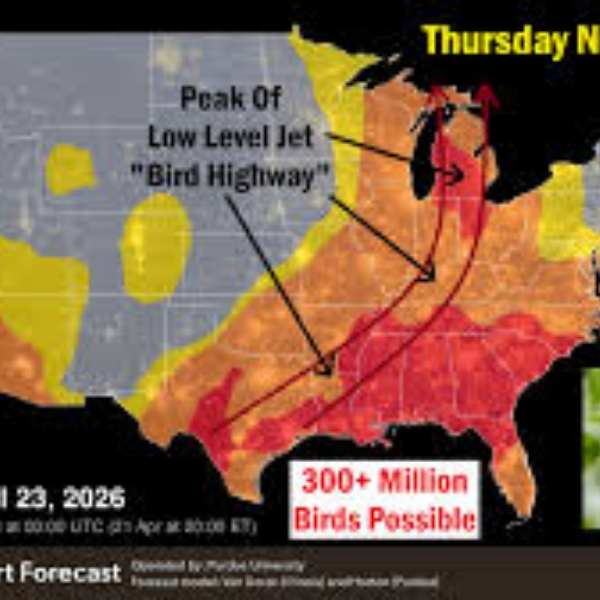
Thursday Night Marks Peak of Low-Level Jet Bird Highway
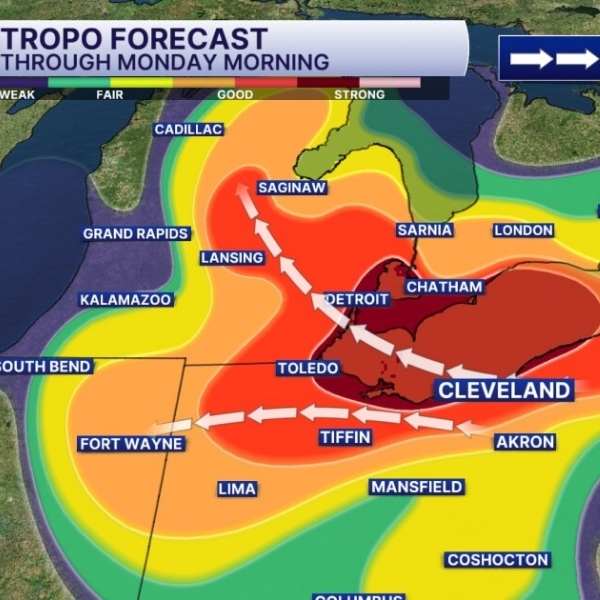
The BirdCast Lights Out Alert forecast map for April 23, 2026, places the peak of the low-level jet Bird Highway directly over Indiana, Michigan, and Ohio overnight. Red arrows on the map show a concentrated corridor of bird movement funneling north through the Great Lakes region.
The forecast assigns a High Lights Out Alert designation to all three states, signaling a critical need to reduce outdoor lighting during peak migration hours. While recent weeks have seen steady migration activity, none have reached the 5 to 10 million range or higher for these states this season, making Thursday night a potentially historic event.
Baltimore Orioles, Warblers, and Hummingbirds Drive Surge
Three key bird groups are fueling the migration surge across Indiana, Michigan, and Ohio. Warblers are now beginning to arrive, marking a key seasonal milestone for birdwatchers. Baltimore Orioles are returning in strong numbers, with many residents already spotting them at feeders stocked with orange halves and grape jelly.
Hummingbirds remain actively on the move during daylight hours, adding to what is shaping up to be one of the most dynamic migration periods of the spring across the region.
Turn Off Outdoor Lights From 11 PM to 6 AM
Purdue University and BirdCast urge residents across the three states to help protect migrating birds by turning off or dimming all non-essential outdoor lights between 11 p.m. and 6 a.m. Thursday night.
Artificial light pollution, highlighted on the forecast map, poses a major threat to nocturnal migrants by causing disorientation and increasing the risk of deadly building collisions. With more than 300 million birds expected overhead, even small reductions in lighting across the region could help save thousands during this critical migration night.







Leave a Comment