
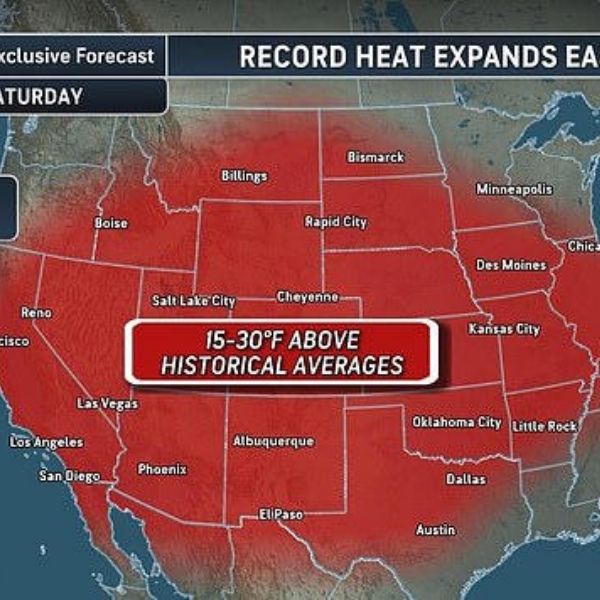
CENTRAL UNITED STATES — An intense and unusual March heatwave is sweeping across much of the central United States, bringing dangerous, summer-like temperatures to states including Texas, Oklahoma, Kansas, Nebraska, Missouri, and Arkansas.
This early-season event is pushing temperatures well into the 90s in several areas, creating conditions more typical of peak summer than late March.
Widespread 90s across multiple states
The most extreme heat is focused on Texas, Oklahoma, Kansas, and Nebraska, where temperatures are climbing into the low to mid-90s, with some locations rising even higher.
Cities across these states are experiencing persistent heat with little relief during the afternoon. Farther east, Missouri and Arkansas are also seeing above-average temperatures, generally ranging from the 80s to near 90 degrees, extending the heatwave’s impact.
Rare March heat could break records
Meteorologists warn that this level of heat is highly unusual for March and could lead to record-breaking temperatures. A strong and persistent high-pressure system is driving the pattern, allowing hot air to build and spread across the region.
Many areas across the Plains and Midwest may challenge or surpass daily high temperature records.
Dry air and sunshine intensify conditions
Very dry air combined with strong sunshine is accelerating daytime heating, worsening the overall impact.
This combination increases:
- Risk of heat-related stress during outdoor activities
- Rapid drying of soil and vegetation
- Elevated wildfire danger
In southern regions, especially Texas, higher humidity levels are also making conditions feel even hotter.
Heat lingers throughout the day
Unlike typical spring conditions, temperatures are rising quickly in the morning and staying elevated into the evening.
Surfaces like cars, roads, and buildings are absorbing and radiating heat, intensifying conditions. Vehicles can become dangerously hot within minutes, highlighting the need for caution.
Why this heatwave is significant
This event stands out for both its intensity and timing in March, when milder spring weather is usually expected. Its broad reach—from Texas through Nebraska and into neighboring states—also makes it a major large-scale weather event.
What’s next
The heatwave is expected to continue in the short term. However, longer-range forecasts suggest a shift in weather patterns toward the end of March and early April, which could bring cooler temperatures and increased chances for rainfall.







Leave a Comment