
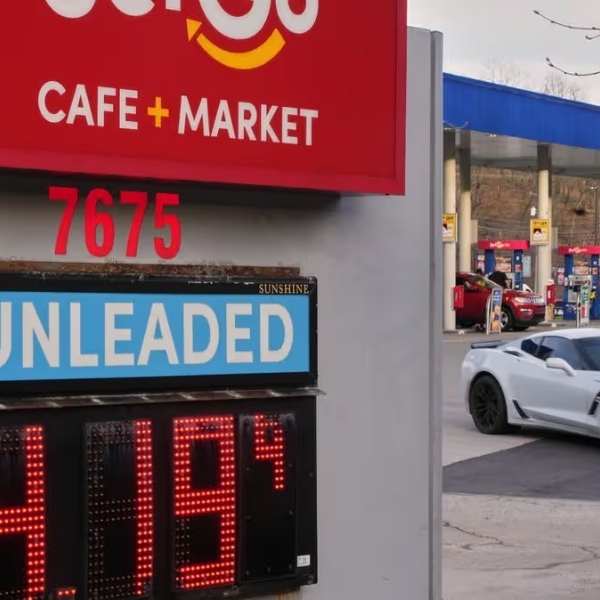
Gas prices are climbing across the country, with some areas seeing extreme spikes—especially along California’s central coast.
In Los Angeles County, prices are nearing $6 per gallon, but in Big Sur, one station is charging far more. At Gorda By The Sea, premium gas is priced at $9.99 per gallon.
Owner Leo Flores said the high cost is due to operating challenges.
“The high prices are because we run the place on generators. When we don’t have power, we create our own power here,” Flores told ABC News.
Drivers passing through the remote area often buy only enough fuel to reach the next station.
“They probably could charge $20 and if you have to get gas, you have to get gas,” said driver Debbie Carignan.
Fuel costs have been rising more broadly, with U.S. crude oil prices jumping about 10% to $110 per barrel. Nationally, gas prices have climbed above $4 per gallon for the first time since 2022.
According to AAA data, California has the highest average price at $5.89 per gallon. Washington and Hawaii are also above $5. Meanwhile, Oregon and Nevada are just under $5.
In contrast, several Midwest states—including Oklahoma, Kansas, Nebraska, and Iowa—are still seeing prices below $3.50 per gallon. Southern states like Texas, Louisiana, and Mississippi also remain below the national average.
Several factors explain the price differences. State and local taxes play a major role, ranging from about 9 cents per gallon in Alaska to around 71 cents in California. Transportation costs also matter, as fuel tends to be more expensive the farther it travels from refineries, many of which are concentrated along the Gulf Coast.
Global factors are also pushing prices higher. Brent crude has risen to about $108 per barrel, while disruptions linked to tensions in the Strait of Hormuz have affected a significant portion of global oil and liquefied natural gas supplies.
As a result, drivers across the U.S. are feeling the impact, with costs continuing to climb in many regions.









Leave a Comment