
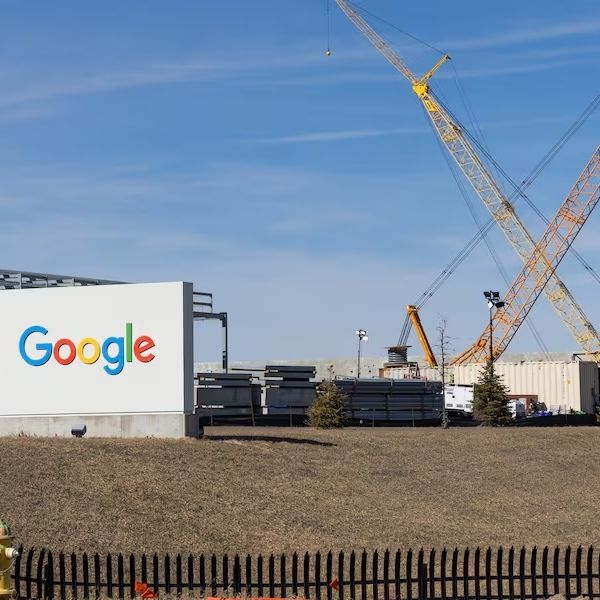
Google is considering building a data center in Nebraska that could require more than three times the electricity used by the entire city of Lincoln during peak summer demand.
The tech giant may power the facility—potentially the largest in state history—through a privately built, utility-scale natural gas plant. That plant could generate more electricity than the state’s largest existing power plant. The proposal also includes carbon capture technology to help reduce greenhouse gas emissions.
Documents presented during a private January meeting of a Nebraska public power district outlined the proposal. Flatwater Free Press obtained the documents under an agreement not to reveal the source. The plans have not been publicly disclosed.
The documents identify three companies: Google, Tenaska, and Tallgrass Energy. Tenaska would power the data center, while Tallgrass could supply natural gas and transport captured carbon. However, Tallgrass has denied involvement.
The project could be operational as early as 2029, though its status remains uncertain. Neither Google nor Tenaska responded to requests for comment.
The Omaha Public Power District, Nebraska Public Power District, and Lincoln Electric System said they do not discuss potential customers before official announcements.
The proposal may depend on a bill in the Nebraska Legislature that would allow privately built power plants for single large industrial users. These facilities could connect to local grids and potentially sell excess electricity back.
Supporters, including public power districts and Tenaska, say the bill would boost economic competitiveness while protecting ratepayers from covering large users’ energy costs.
Proposal could be first of its kind
Google already operates data centers in Papillion, Omaha, and Lincoln, and its parent company Alphabet Inc. plans to expand data center investments in 2026.
The proposed facility could require between 1,000 and 3,000 megawatts of power, making it one of the largest in the country, according to a Yale University expert.
Utilities nationwide are struggling to meet rapidly growing electricity demand driven by data centers and other industries.
At the same time, lawmakers in multiple states have introduced bills to pause new data center construction, while others are exploring policies that allow companies to generate their own power.
During a recent meeting with tech executives, Donald Trump supported the idea of letting data centers build their own power sources to help control rising energy costs.
Nebraska’s governor has proposed similar legislation, aiming to position the state as competitive in energy and artificial intelligence development.
The bill would allow private developers like Tenaska to generate more than 1,000 megawatts for a single industrial customer and connect to the public grid.
Tenaska CEO Chris Leitner told lawmakers the company has reserved more than $2 billion in equipment for power generation, potentially available by late 2028.
Tenaska eyes southeast Nebraska land
Tenaska has been acquiring land across southeast Nebraska. Since December, it has secured options on more than 2,600 acres across four counties, according to public records.
Some landowners said company representatives initially referenced plans tied to artificial intelligence-related power needs before describing broader development concepts like business parks.
Local officials have raised concerns about transparency, resource use, and the type of industry the project could bring.
The company also increased its political contributions, donating $50,000 to the governor’s reelection campaign in late December, bringing its total to $65,000 in 2025.
State officials say the proposed legislation aims to ensure that large corporations pay for their own power generation rather than passing costs onto residents.











Leave a Comment